
Pottery & Ceramics
The Potter's Legacy: Talavera in Puebla
Maria Elena has been crafting Talavera pottery for forty years in Puebla, Mexico. Each piece carries five generations of fingerprints — and one of the strictest appellations of origin in the Americas.
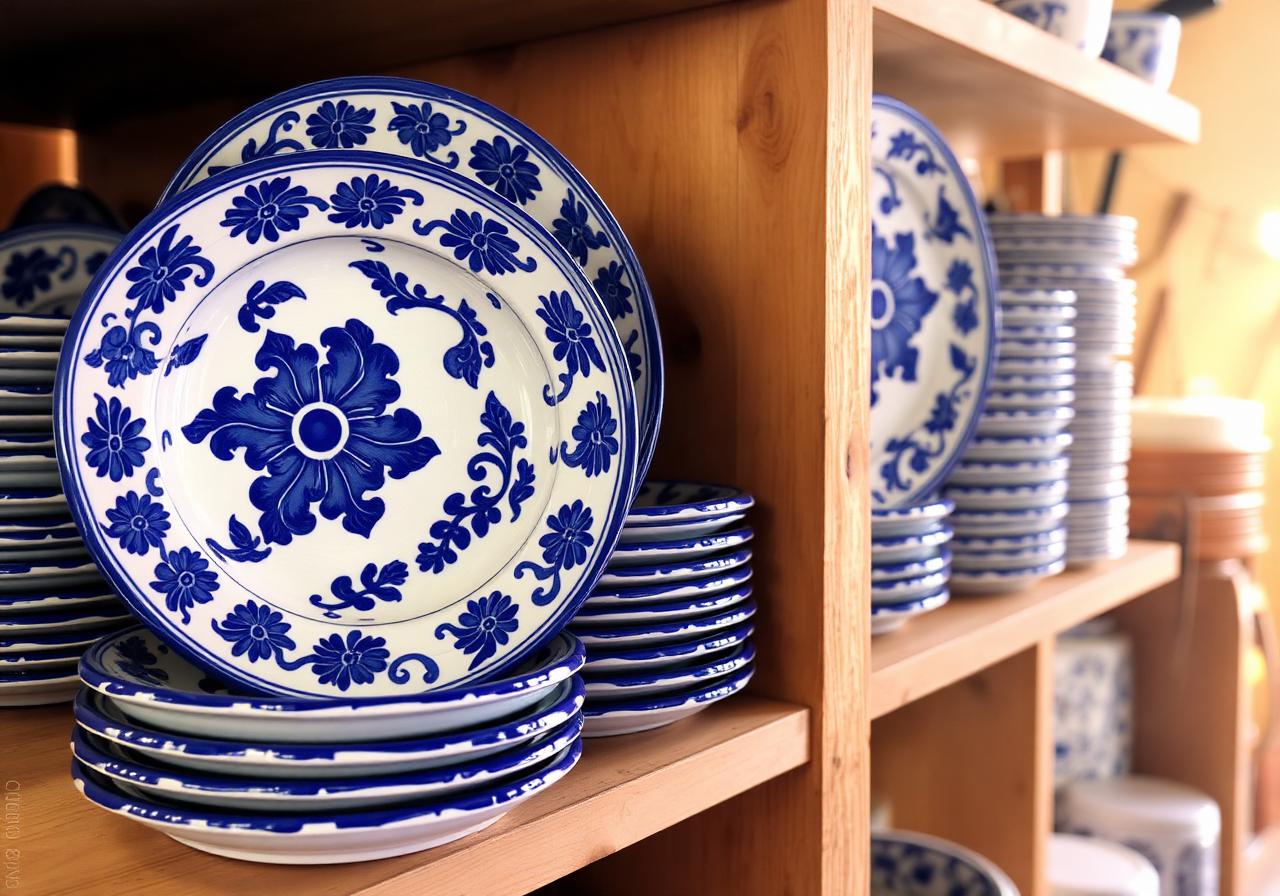
In the dusty courtyard of a colonial-era taller in Puebla, Maria Elena Sánchez bends over a wheel that has carried four generations of her family before her. The white tin glaze, the cobalt strokes, the precise Moorish geometries — Talavera Poblana is one of the few craft traditions in the Americas still protected by an appellation of origin, a Denominación that demands clay from specific quarries near Tecali, mineral pigments from named sources, and firing in wood-fed kilns at 1050°C.
Maria's workshop produces no more than two hundred pieces a year. "We are not factories," she says, smoothing a plate the colour of milk. "We are memory." Each piece is signed on the underside with the taller's mark and a serial number — a guarantee that, somewhere between China, Spain, Talavera de la Reina, and the highlands of Mexico, this object has completed a five-hundred-year journey.
The journey is, briefly: the technique is Chinese in distant origin (the cobalt-on-white aesthetic), Persian and Andalusian in early Iberian transmission, Spanish in immediate provenance — the town of Talavera de la Reina in Castile-La Mancha gave the form its name — and Mexican in its current centre of gravity. Mexican Talavera has been continuously produced in Puebla since the late 1500s, longer than the same tradition has existed in its Spanish hometown.
What survives in Maria's workshop is the slowness. The clay is aged for ninety days before throwing. The biscuit fires for nine hours. The cobalt is applied in four diluted washes, each one drying before the next, which is why a good Talavera blue has the depth of a pond and not the flatness of a printed plate. The kiln is a wood-fired arched chamber; Maria's nephew Luis, 23, is the kiln master.
Younger potters in Puebla face a market flooded with imitations — most made in Asia, some made down the road in Cholula and labelled "Talavera-style." The Mexican government issued the Denominación de Origen in 1995, and UNESCO inscribed Talavera on the Representative List of Intangible Cultural Heritage in 2019. Both have helped. Neither has solved the problem. "A stamp does not fire the kiln," Maria says, in what has become the unofficial slogan of the Poblano craft revival.
She has trained eight apprentices over the years. Six are still working. Three opened their own talleres in Puebla, two work for her, one moved to Mexico City to design for a luxury homewares brand and now sends Maria expensive coffee in October. Maria considers her record "acceptable, no more."
Her daughter Beatriz, 35, runs the business side. There is a website now. There is a waiting list. The waiting list is currently fourteen months long, which means that the piece I watched Maria glaze on Tuesday will arrive in a buyer's hand around the time Maria turns sixty-five.
On my last morning in the taller, Maria signs a plate. The mark is the taller's, the date is May 2026, and there is a small additional flourish — a swift, the same swift Maria has painted on the back of every plate she has finished personally since 1986. It is the only thing on the plate that is not strictly traditional. "Even Talavera is allowed one mistake," she says. "Mine is birds."
Keep reading
 Pottery & Ceramics
Évora, Portugal
Alentejo Blue: The Last Azulejo Painters of Évora
In a workshop tucked behind a Roman temple, three women still paint tin-glazed tiles the slow way — and a new generation is finally lining up at the door.
 Pottery & Ceramics
İznik, Türkiye
The Blue Pottery of İznik Comes Back
For four hundred years, İznik tiles covered the inside of Süleyman the Magnificent's mosques. Then the workshops closed. A foundation in the same town has spent twenty-five years working out how they did it.
 Pottery & Ceramics
Fez, Morocco
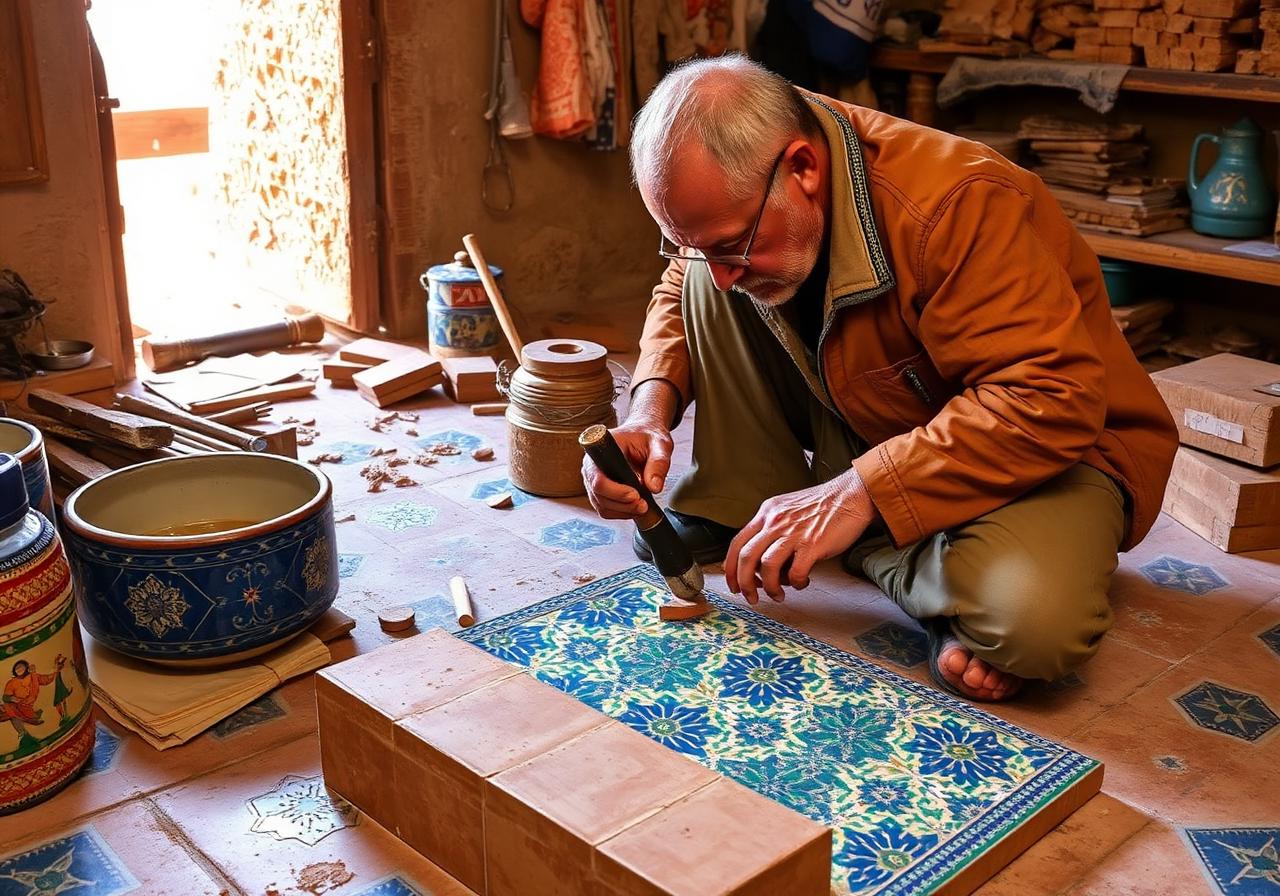
The Geometry of Fez: Zellige in the Old City
Zellige tilework is cut by hand, one tessera at a time, in workshops that have not changed since the 14th century. We spent ten days in the medina with the masters and the apprentices.