
Pottery & Ceramics
The Geometry of Fez: Zellige in the Old City
Zellige tilework is cut by hand, one tessera at a time, in workshops that have not changed since the 14th century. We spent ten days in the medina with the masters and the apprentices.
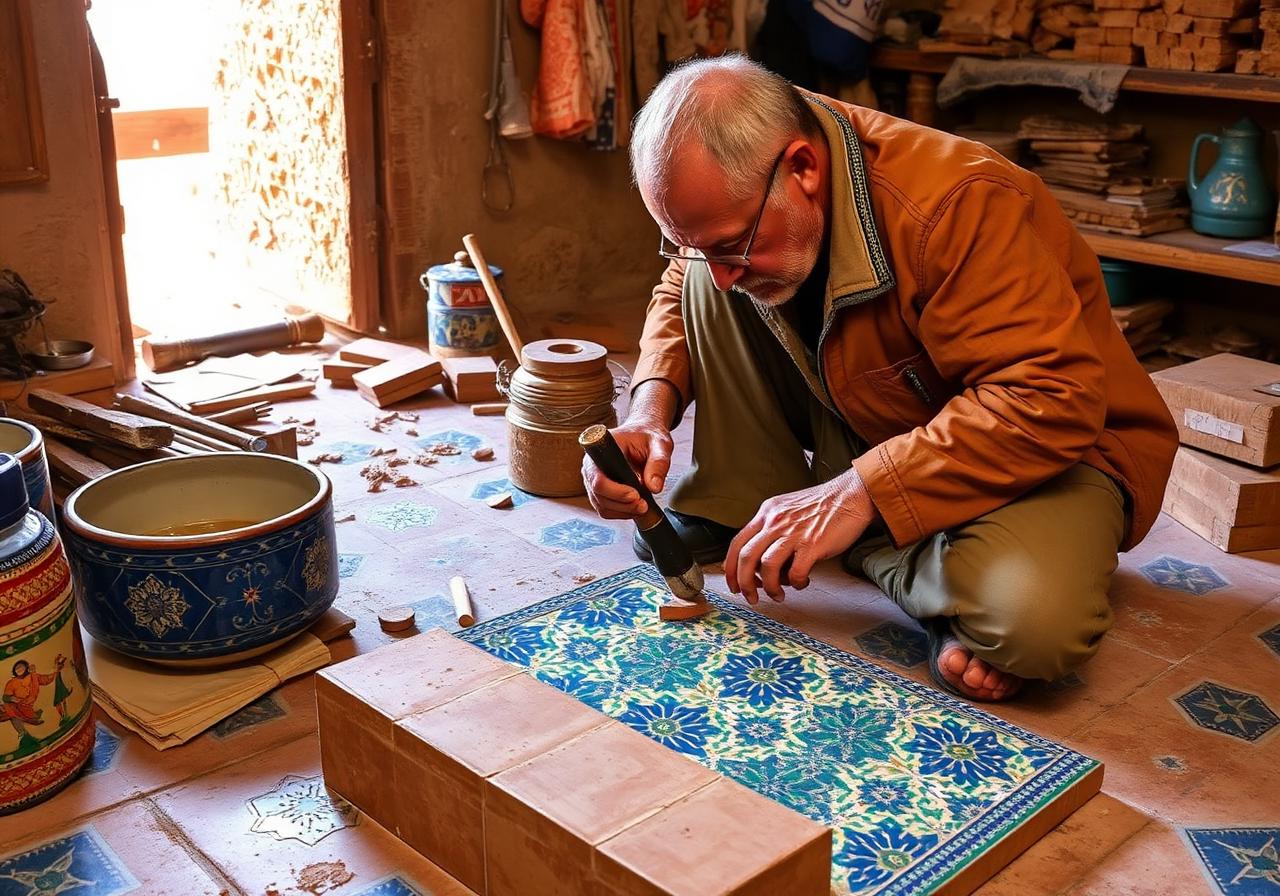
In the maâlems' workshops of Fez, apprentices spend three years learning only to cut a single shape. Not a panel, not a pattern — one shape. The dart, the eight-pointed star, the diamond, the seven-pointed rosette. Only after a decade are they permitted to design a full panel. Only after twenty years are they called maâlem.
Zellige — from the Arabic az-zulayj, polished stone — is mathematics in clay. Every wall in a Moroccan riad is a finite portion of an infinite pattern, computed entirely in the head of a master who has, in most cases, never opened a geometry textbook. The patterns are based on a grammar of overlapping symmetries that mathematicians did not formally describe until the early 20th century, by which time the maâlems had been working with them comfortably for six hundred years.
I spend ten days in the workshop of Mohammed Lahlou in the Andalusian quarter of Fez. The workshop is a courtyard, open to the sky, with a single muqaddim (foreman) overseeing six apprentices and two senior cutters. The clay comes from a quarry outside Fez that has been worked since at least the Marinid period.
The biscuit tiles are fired once at low temperature and arrive in the workshop the colour of damp cardboard. They are then glazed — saturated cobalt, deep green, white, ochre, brick red — and fired again. Only then does the cutting begin.
The cutting is done with a hammer called a menqach. The cutter sits on a low stool, the glazed tile across his thigh on a leather pad, and chips away the excess in chips that look, at first, alarmingly large. The tile is reduced to the desired tessera by feel, not by ruler. There is no template. The cutter holds the shape — a dart of perhaps three centimetres, with seven angles, each of which has a name — in his head.
Once the tesserae are cut, the panel is assembled face-down on the workshop floor and grouted in place. The pattern is invisible to the assembler until the panel is flipped, hours later, and propped against the wall. There is a small ceremony in this. Mohammed claps once, the apprentices stop work, and the panel is turned.
What makes Fez zellige different from the (very fine) imitations being produced in Spain and the Gulf is, simply, that the entire chain — clay, glaze, cut, assembly — happens within a square kilometre of the medina, and the people doing the work have been within that kilometre since they were children.
I ask Mohammed if he can teach the geometry to outsiders. He thinks about it for a long time. "The patterns, yes," he says. "The patience, perhaps. The light here — no. That you cannot teach. That you can only stand in."
On my last afternoon, the apprentices let me try cutting a single dart. I take eighteen minutes and produce something that is not a dart and is barely a shape. The senior cutter takes pity on me, picks up the menqach, and produces a perfect dart in four hammer strokes that take perhaps six seconds. He hands it to me without comment. I have it on my desk.
Keep reading
 Pottery & Ceramics
Évora, Portugal
Alentejo Blue: The Last Azulejo Painters of Évora
In a workshop tucked behind a Roman temple, three women still paint tin-glazed tiles the slow way — and a new generation is finally lining up at the door.
 Pottery & Ceramics
İznik, Türkiye
The Blue Pottery of İznik Comes Back
For four hundred years, İznik tiles covered the inside of Süleyman the Magnificent's mosques. Then the workshops closed. A foundation in the same town has spent twenty-five years working out how they did it.
 Pottery & Ceramics
Puebla, Mexico
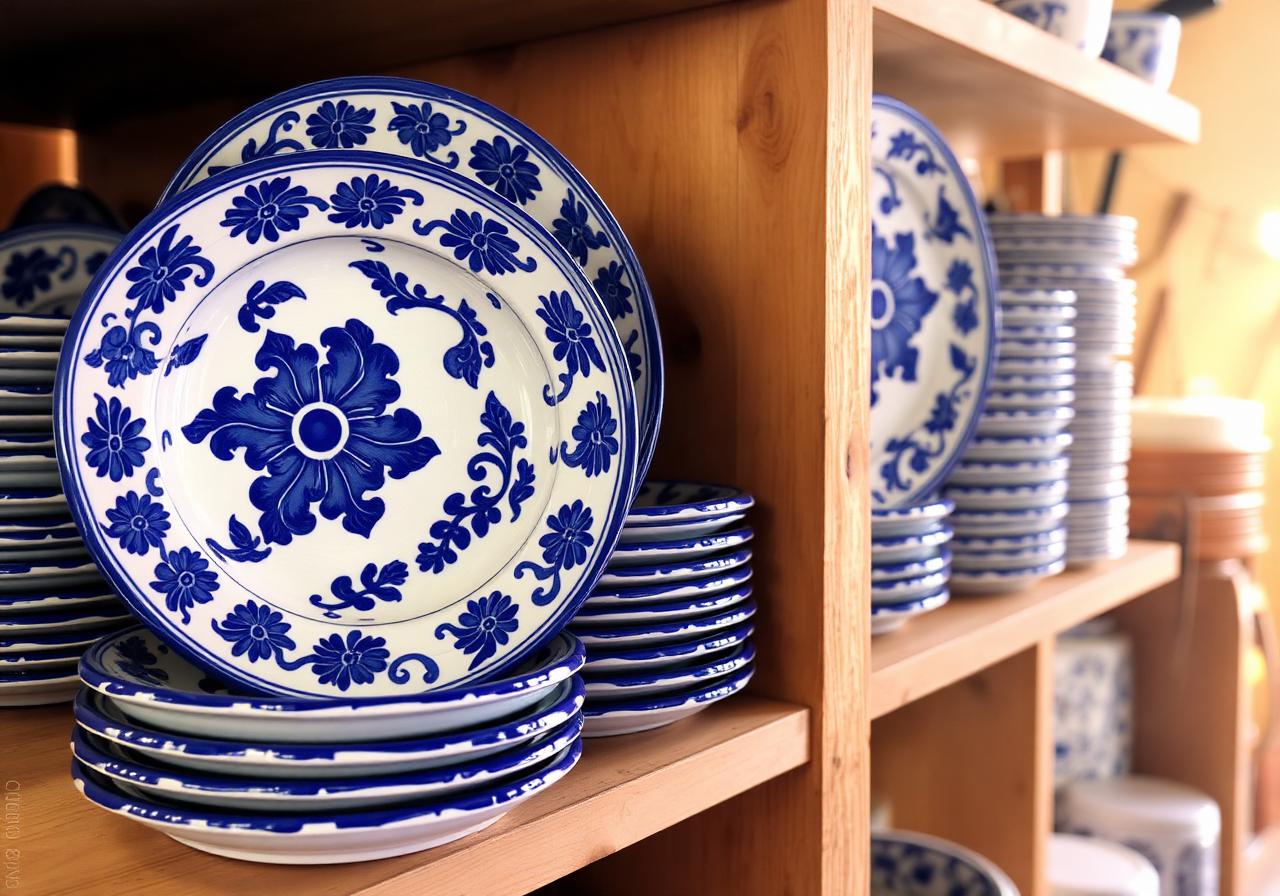
The Potter's Legacy: Talavera in Puebla
Maria Elena has been crafting Talavera pottery for forty years in Puebla, Mexico. Each piece carries five generations of fingerprints — and one of the strictest appellations of origin in the Americas.