
Pottery & Ceramics
The Blue Pottery of İznik Comes Back
For four hundred years, İznik tiles covered the inside of Süleyman the Magnificent's mosques. Then the workshops closed. A foundation in the same town has spent twenty-five years working out how they did it.

If you look up inside the Süleymaniye Mosque in Istanbul, the dome is a quiet grey. Look down — at the panels behind the mihrab — and you see why İznik became, in the sixteenth century, the most important ceramic centre west of China. The İznik tiles are an unrepeatable saturated turquoise, a tomato-coral red, a cobalt as deep as the Bosphorus at midnight. Then, around 1700, the workshops simply stopped. Nobody made another good İznik tile for nearly three centuries.
What happened is partly economic — the Ottoman court's tile contracts moved to Kütahya, the kilns went cold — and partly chemical. The signature "İznik red" was an iron-rich slip applied in such a thick layer that it stands proud of the glaze, almost in relief. Getting it not to crack, not to blacken, not to wash out in the firing required a kind of tacit knowledge that was held by perhaps a dozen master potters at any one time. When they died without apprentices, the red went with them.
The İznik Foundation, founded in 1993 by Işıl Akbaygil, has spent twenty-five years reverse-engineering the technique. The foundation now occupies a low building on the edge of İznik town, on the same lake the original kilns drew clay from. There are 38 employees, a chemistry lab, four firing kilns, and a row of decorators sitting in north light at long benches.
Ayşe Bayram is the foundation's senior decorator. She is fifty-one, trained as a graphic designer in Istanbul, came to İznik in 1998 "for six months" and has been here ever since. She is painting a panel — a 36-tile composition for a private commission in Doha — that is a near-replica of a wall in the Topkapı harem.
The technique she uses is called underglaze. The biscuit-fired tile is painted with metal-oxide pigments — cobalt for blue, copper for turquoise, manganese for purple, the secret iron slip for red — and then dipped in a clear quartz-rich glaze and fired a second time at 950°C. The colours go in dull and matte and come out vitrified and saturated.
Ayşe's panels go to mosques in Qatar, to museums in Berlin, to a private buyer in Singapore. They also go, slowly but increasingly, to Turkish public buildings — the foundation recently completed a 4,000-tile restoration of the Rüstem Pasha Mosque in Eminönü, the most İznik-heavy mosque in Istanbul.
The remarkable thing is how long it has taken to be allowed to do this work. "For the first ten years," the foundation's director tells me, "the academic establishment said: this is impossible. The technique is lost. You cannot make these reds. Then we made the reds. Then they said: well, they are not authentic. Then we did the chemical analysis. Now they are quiet."
On the way out I pass the kilns. One is being unloaded. The decorator at the far end lifts out a tile — a single tulip, the Ottoman flower par excellence — and sets it on the rack. The red is, undeniably, the red. The town that lost it has it back.
Keep reading
 Pottery & Ceramics
Évora, Portugal
Alentejo Blue: The Last Azulejo Painters of Évora
In a workshop tucked behind a Roman temple, three women still paint tin-glazed tiles the slow way — and a new generation is finally lining up at the door.
 Pottery & Ceramics
Fez, Morocco
The Geometry of Fez: Zellige in the Old City
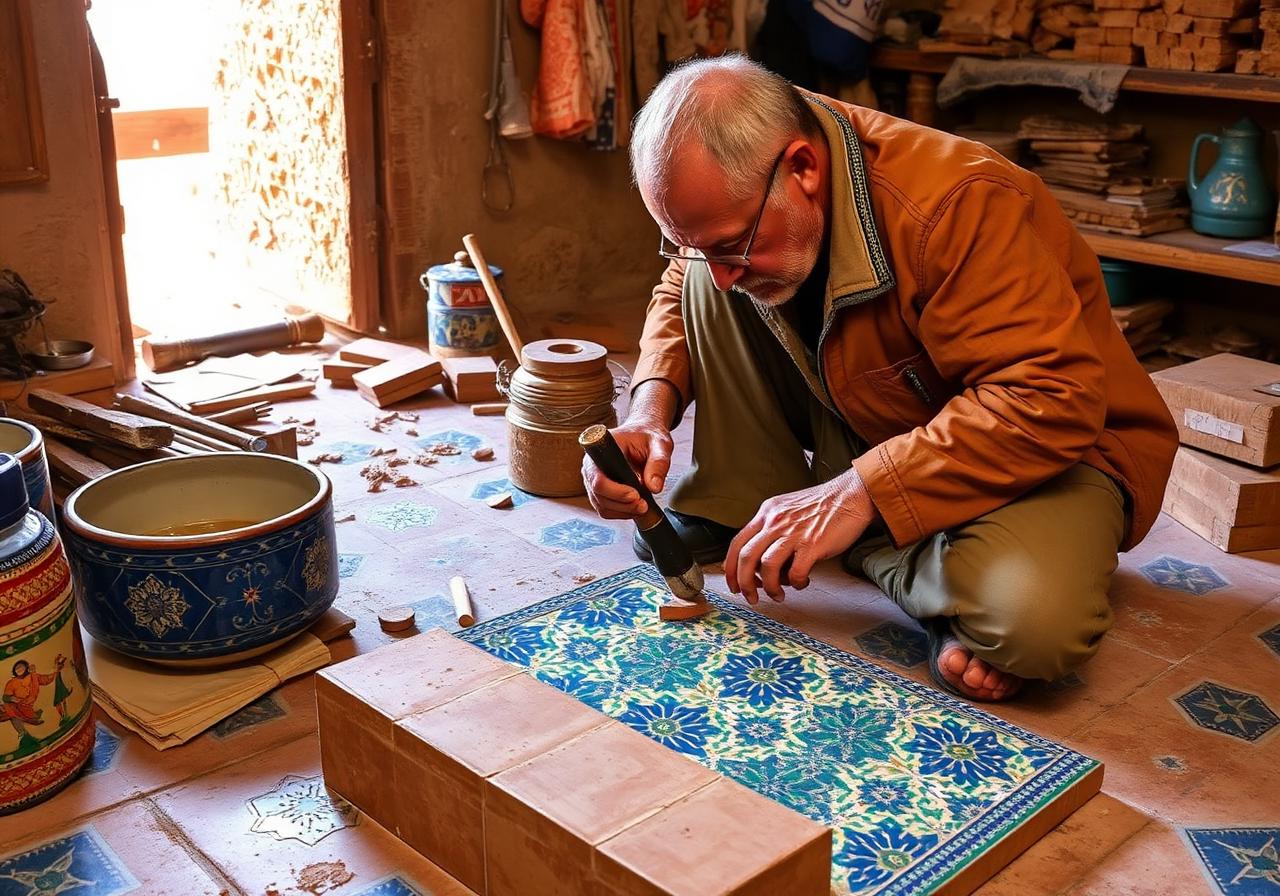
Zellige tilework is cut by hand, one tessera at a time, in workshops that have not changed since the 14th century. We spent ten days in the medina with the masters and the apprentices.
 Pottery & Ceramics
Puebla, Mexico
The Potter's Legacy: Talavera in Puebla
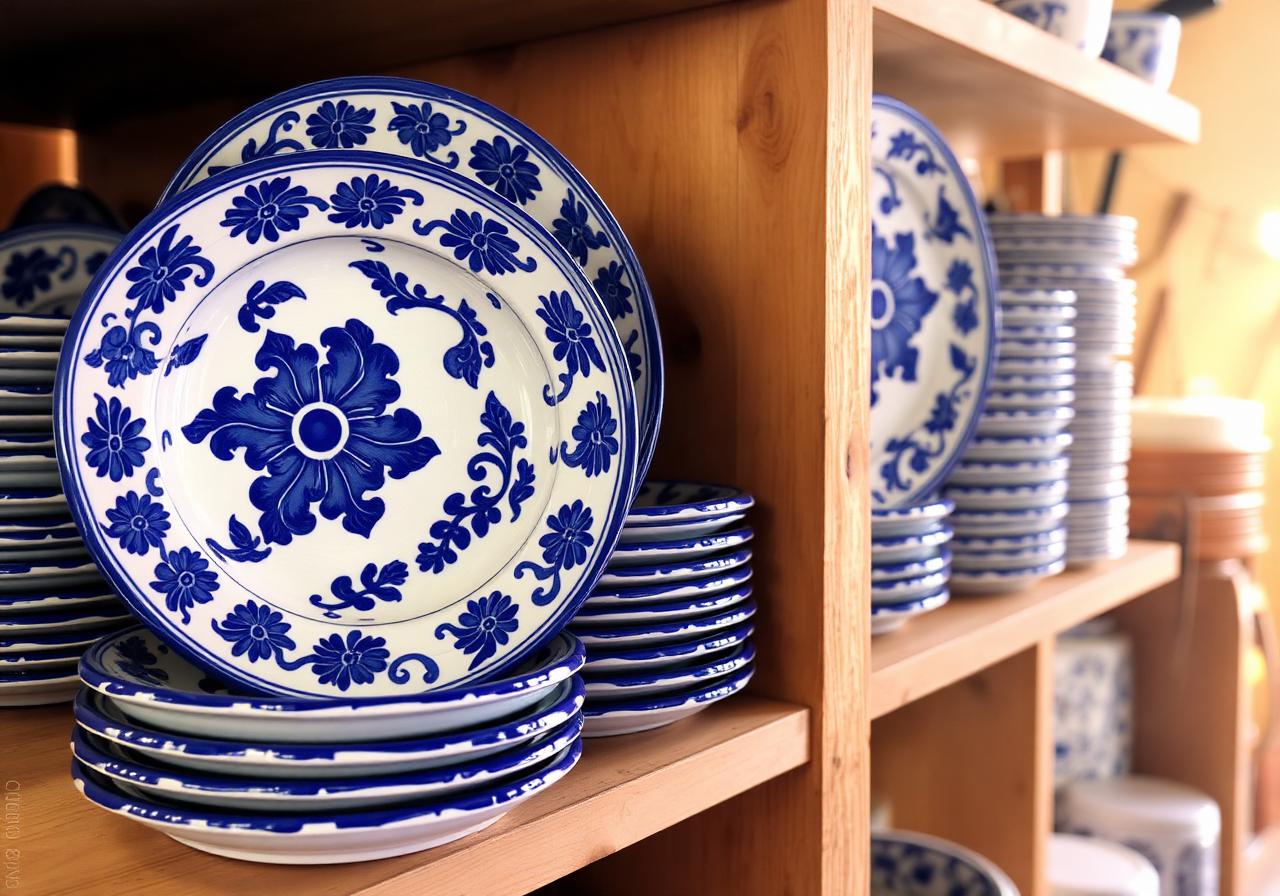
Maria Elena has been crafting Talavera pottery for forty years in Puebla, Mexico. Each piece carries five generations of fingerprints — and one of the strictest appellations of origin in the Americas.