
Pottery & Ceramics
Alentejo Blue: The Last Azulejo Painters of Évora
In a workshop tucked behind a Roman temple, three women still paint tin-glazed tiles the slow way — and a new generation is finally lining up at the door.

It is just past seven in the morning when Maria do Carmo unlocks the workshop on Rua da Misericórdia. The whitewashed walls of Évora are still pink with sunrise, and the swifts that nest under the eaves are already loud. Inside, the smell is unmistakable: linseed oil, cobalt, and the chalky undertone of biscuit-fired clay waiting for its second life.
For thirty-eight years Maria has painted azulejos — the tin-glazed tiles that have covered the walls of Portuguese churches, palaces and train stations since the sixteenth century. She trained under Mestre Querubim Lapa in Lisbon in the late 1980s and came home to the Alentejo in 1993, convinced (correctly, she says now) that the south would eventually need her more than the capital would.
Azulejo, the word, comes from the Arabic az-zulayj, "polished stone." The technique arrived in Iberia through al-Andalus, but the Portuguese took it somewhere stranger: by the eighteenth century the entire interior of a country church might be a single continuous narrative, blue figures pacing across white walls like a film unspooling.
What Maria does in Évora is not restoration, exactly, though she does that too — last spring her workshop replaced 412 missing tiles on a Baroque panel inside the Igreja de São Francisco. The bigger part of her work is new commissions in the old grammar: a wine producer in Estremoz who wants his cellar tiled with grape harvests; a hotel in Lagos that asked for a five-metre mermaid frieze; the city of Évora itself, which is slowly retiling the old fountains.
The work is unhurried by necessity. A single tile passes through nine stages and at least three people. The biscuit tile is dipped in tin glaze, dried, traced (a perforated cartoon dusted with charcoal), painted in four cobalt washes, sometimes outlined in manganese, glazed again, fired at 980°C, inspected, and either kept or quietly broken. Maria's apprentice Catarina, 24, broke seventeen tiles in her first month. Now she breaks three.
I ask Maria what she thinks the future looks like for azulejo painting in the Alentejo. She points at Catarina without turning around. "Her," she says. "And the two girls coming up from Beja in September." There is a waiting list now, for the first time since the 1970s — partly because of a renewed Portuguese pride in vernacular craft, partly because the EU's Cultura programme has begun funding workshop apprenticeships, and partly because, after years of mass-produced imitation tiles flooding souvenir shops, customers have noticed the difference.
We walk through the kiln yard. A panel propped against the wall shows the Battle of Aljubarrota in progress — half-painted soldiers, half-blank tiles. "He'll be ready in November," Maria says of a half-finished knight. "João of Avis, I mean. We are not in a rush, and neither is he. He has been waiting six hundred years."
Before I leave, she hands me a single tile fresh from the kiln — a swift, the bird that nests under her roof. "You take this. Tell people that in Évora, the swifts are still being painted."
Keep reading
 Pottery & Ceramics
İznik, Türkiye
The Blue Pottery of İznik Comes Back
For four hundred years, İznik tiles covered the inside of Süleyman the Magnificent's mosques. Then the workshops closed. A foundation in the same town has spent twenty-five years working out how they did it.
 Pottery & Ceramics
Fez, Morocco
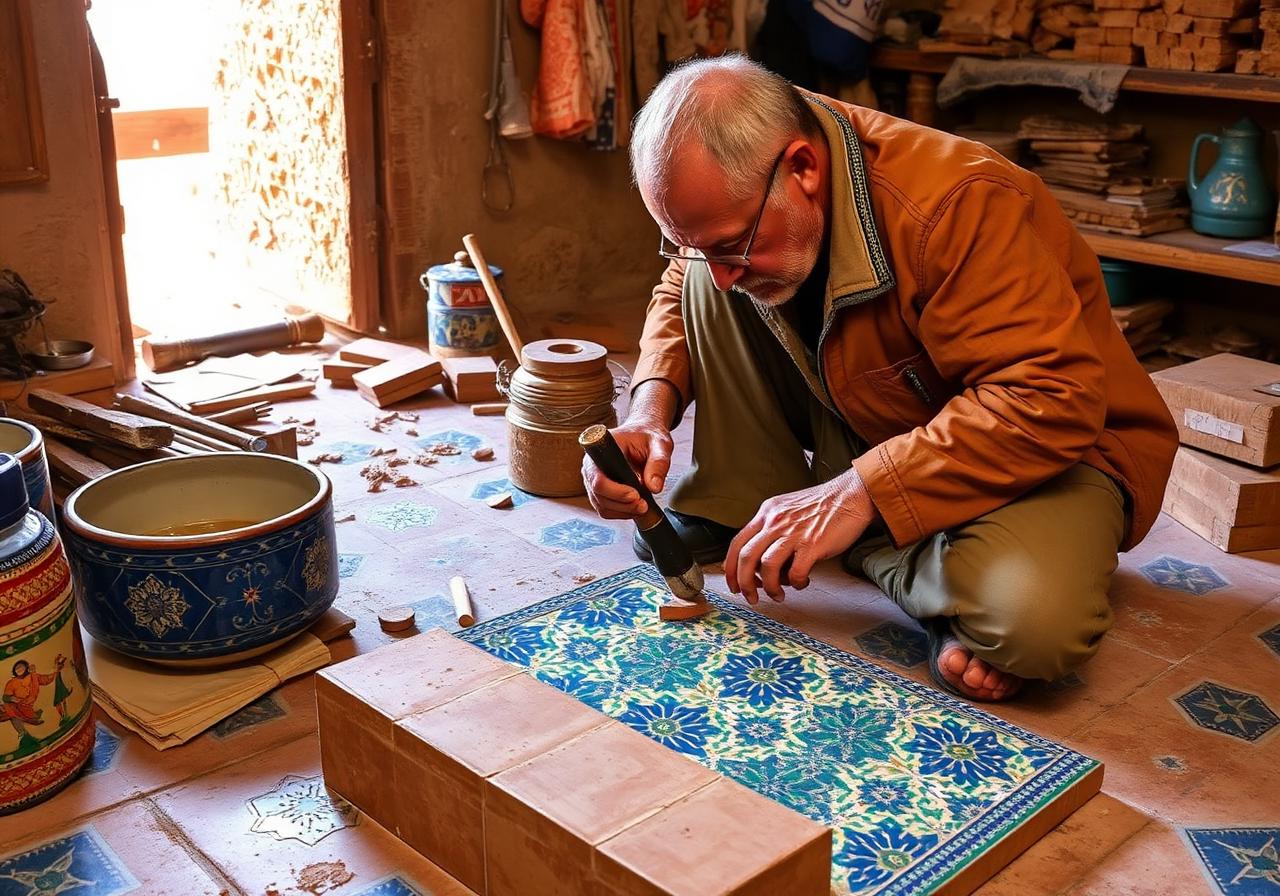
The Geometry of Fez: Zellige in the Old City
Zellige tilework is cut by hand, one tessera at a time, in workshops that have not changed since the 14th century. We spent ten days in the medina with the masters and the apprentices.
 Pottery & Ceramics
Puebla, Mexico
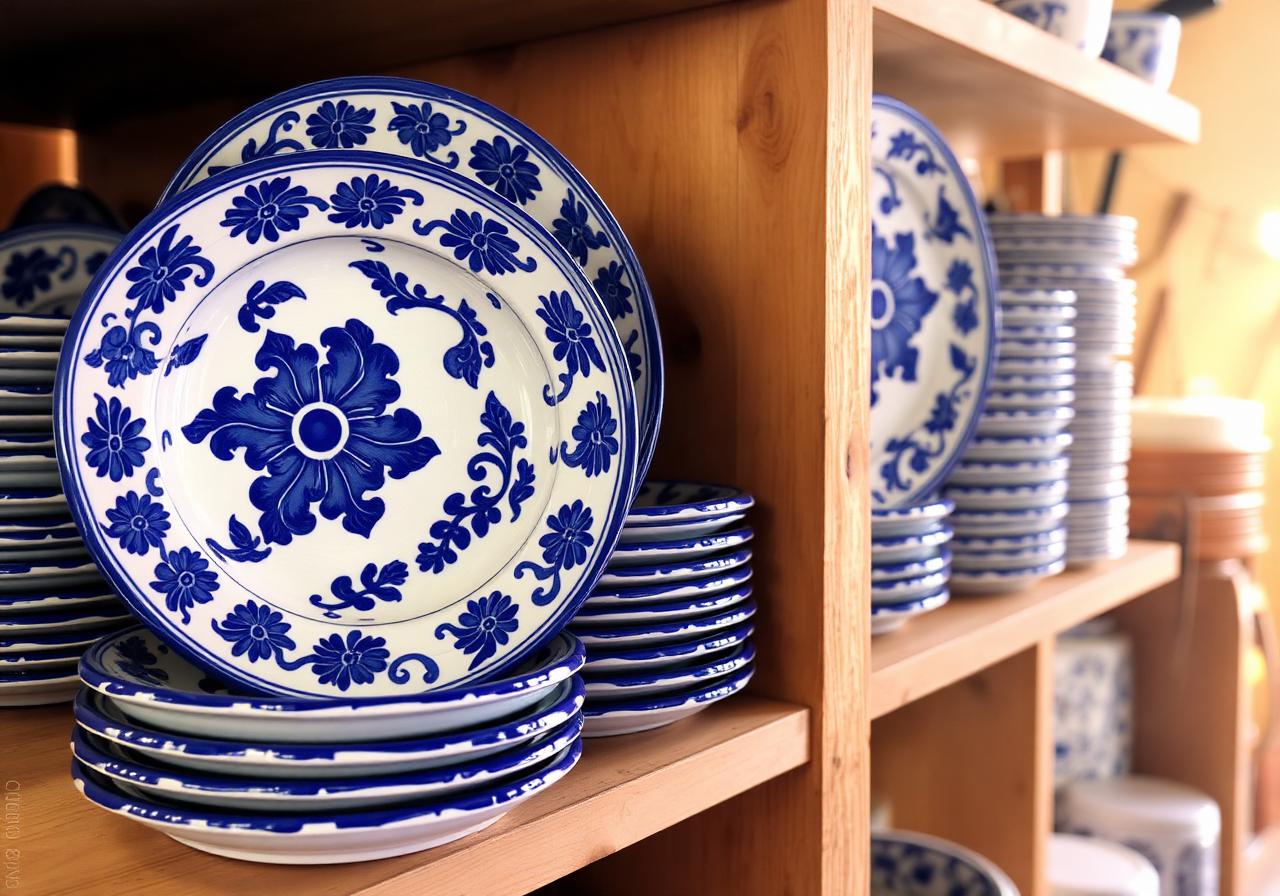
The Potter's Legacy: Talavera in Puebla
Maria Elena has been crafting Talavera pottery for forty years in Puebla, Mexico. Each piece carries five generations of fingerprints — and one of the strictest appellations of origin in the Americas.