
Textiles & Weaving
Blue Fields, Blue Threads: The Lavender Weavers of Valensole
For three weeks each July, the plateau of Valensole turns violet — and a cooperative of eight weavers turns that colour into linen napkins, dish towels and the coarse-woven bags that carry the harvest home.

The lavender fields of Valensole flower in the first week of July, and the whole plateau — sixty kilometres east of Aix-en-Provence — vibrates with a low, almost mechanical hum: two million bees, working in shifts.
In the village itself, in a stone-walled atelier that was once a bakery, the cooperative Tissages du Plateau has been weaving lavender-dyed linen since 1978. Eight weavers, four looms, one dye vat. The dye is not chemical; it is the exhausted lavender pulp left over from the distilleries, boiled with iron mordant into a soft, muted violet that no synthetic can match.
The cooperative's founder, Sylvie Marchand, 74, learnt weaving from her grandmother and dyeing from a Catalan textile chemist who retired to the village in the 1970s. She has trained, by her own count, forty-one apprentices. Six of them still weave professionally, which she considers a triumphant ratio.
July is harvest and market season at once. Bags of coarse-woven linen — the sacs de récolte — are stacked by the door, ready to hold the cuttings. Finer pieces — table linen, curtains, the famous striped Valensole tea towel — are folded for the Saturday market in Riez.
"The tourists take the small things," Sylvie says. "The chefs from Marseille take the tablecloths. And the farmers take the sacks. Every part of the loom's output has a customer. That is the definition of a healthy craft."
Keep reading
 Textiles & Weaving
Isle of Harris, Scotland
Harris Tweed: The Island That Weaves Itself
On the Outer Hebrides, the only fabric in the world protected by an Act of Parliament is still woven on pedal looms in croft sheds. We spent a week with the weavers of Lewis.
 Textiles & Weaving
Pag, Croatia
The Shepherds of Pag and the Lace That Won UNESCO
On a windswept Croatian island where almost nothing grows, women have been making a lace so fine it was once used as currency. UNESCO listed it in 2009. The waiting list is now three years long.
 Textiles & Weaving
Sacatepéquez, Guatemala
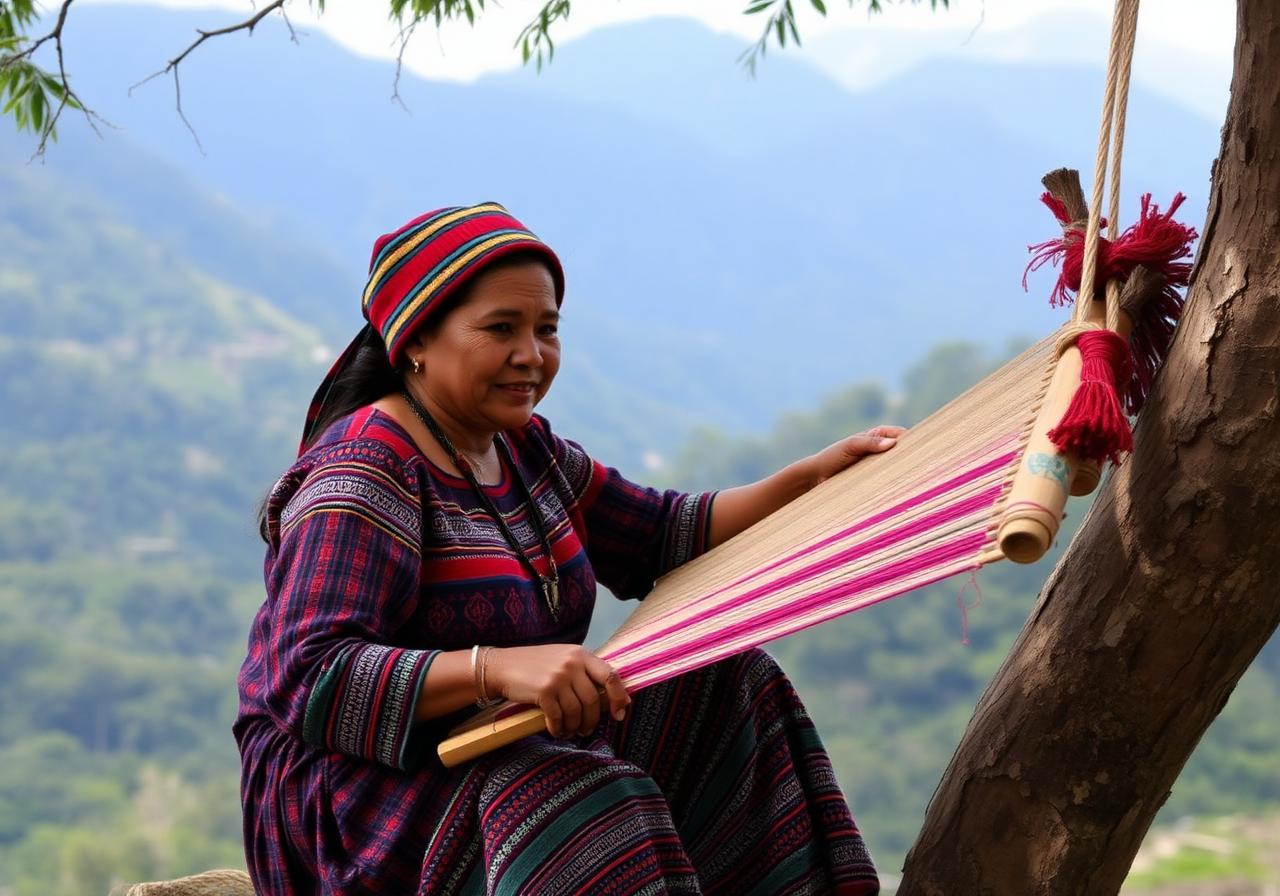
Threads of Heritage: Mayan Backstrap Weaving in Guatemala
In the Guatemalan highlands, Mayan backstrap weavers turn cotton into cosmology — and into a quiet political act of refusing to disappear.