
Textiles & Weaving
A Quiet Revival on Hokkaido
After more than a century of suppression, Ainu wood and textile traditions are being taught again — in schools, museums, and home looms across the north.
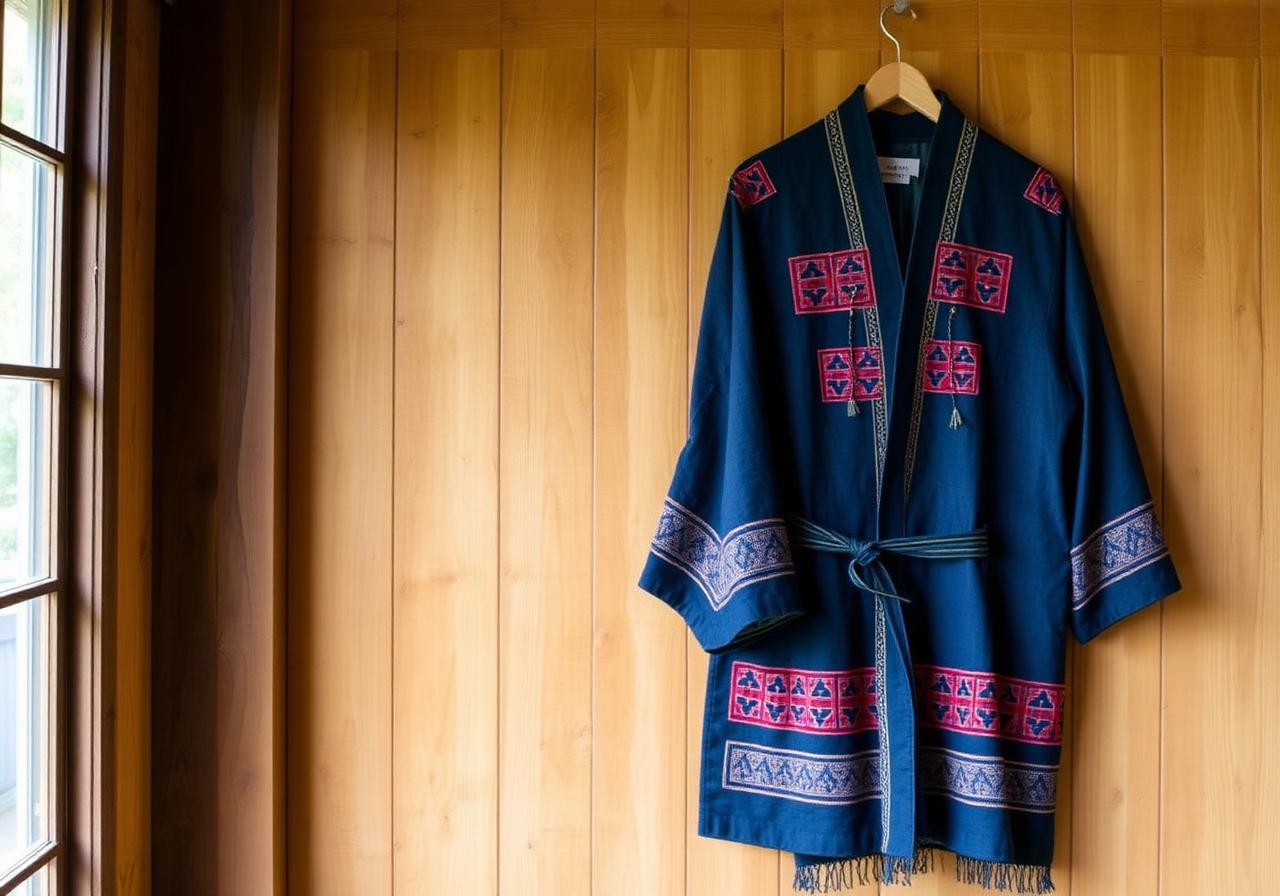
When the Upopoy National Ainu Museum opened in Shiraoi in 2020, it was the first national institution in Japan dedicated to the country's only legally recognised indigenous people. The opening was, depending on whom you ask, a hundred years late or twenty years early.
Five years on, the Ainu language has returned to elementary curricula in three Hokkaido towns. The attus bark-fibre robe — once nearly extinct — is being woven again by a co-operative of two dozen women based in Nibutani. The ikupasuy carved prayer-sticks are being commissioned by Shinto shrines that, two generations ago, would not have permitted Ainu visitors to enter.
I spend four days in Nibutani, the most Ainu-identified village in modern Hokkaido. The Kayano Shigeru Memorial Museum — named for the politician and linguist who, almost single-handedly, kept the Ainu language documented through the suppression years — houses the world's most complete archive of Ainu material culture. The weavers' co-operative meets in a building behind it.
Kayano Shigeko, 71, is the founder of the co-operative and Shigeru's niece. "We are not a museum," she tells me on the first morning. "Museums are for things that are finished." She strips bark from an elm — the attus tree — and shows me how it is soaked, beaten, separated into fibres, and spun on the thigh. The process is at least a thousand years old.
The renewed visibility is recent. The Ainu were only legally recognised as an indigenous people in Japan in 2008. The language was, for most of the twentieth century, actively suppressed in schools. By the 1980s, fluent native speakers numbered in the dozens. Today there are perhaps 5,000 learners in formal programmes — a tiny number, but the curve is, at last, going the right way.
What the co-operative makes is not, strictly, traditional. The traditional robe is unpatterned and the dye palette was originally limited to natural browns and indigos. Modern attus pieces incorporate the Ainu mon — the diamond, the spiral, the protective "eyes" — in coloured embroidery on cuffs and hems, an aesthetic choice that began in the 1970s and has now hardened into the recognisable form. "Traditions are not photographs," Shigeko says. "They are conversations."
The economic picture is, frankly, hard. A full attus robe takes perhaps four months and sells for between 250,000 and 600,000 yen — between roughly $1,600 and $3,800. The co-operative produces perhaps twenty per year. The waiting list is, currently, three years. The buyers are split between Hokkaido museums, private Japanese collectors, and an increasing number of overseas institutions; the Smithsonian acquired three pieces in 2024.
On my last evening Shigeko cooks ohaw — the Ainu salmon and root-vegetable stew — over a sunken hearth in the museum's reconstructed cise (traditional house). She speaks in Ainu to her granddaughter, who replies in Japanese and then, gently corrected, in Ainu. The exchange takes a long time. Both of them are patient. The fire is patient. The language is, slowly, patient with itself.
Keep reading
 Textiles & Weaving
Isle of Harris, Scotland
Harris Tweed: The Island That Weaves Itself
On the Outer Hebrides, the only fabric in the world protected by an Act of Parliament is still woven on pedal looms in croft sheds. We spent a week with the weavers of Lewis.
 Textiles & Weaving
Pag, Croatia
The Shepherds of Pag and the Lace That Won UNESCO
On a windswept Croatian island where almost nothing grows, women have been making a lace so fine it was once used as currency. UNESCO listed it in 2009. The waiting list is now three years long.
 Textiles & Weaving
Sacatepéquez, Guatemala
Threads of Heritage: Mayan Backstrap Weaving in Guatemala
In the Guatemalan highlands, Mayan backstrap weavers turn cotton into cosmology — and into a quiet political act of refusing to disappear.