
Folk Paintings
The Little Saints of Aubagne: Provence's Santon Makers Prepare for Summer
In the red-clay hills behind Marseille, a handful of family ateliers spend the long days of May sculpting the miniature Provençal world — one fisherman, one shepherd, one baker at a time.

Aubagne smells, at the end of May, of thyme and wet clay. The workshop of the Escoffier family sits on the edge of the old town, and by nine in the morning Céline Escoffier already has thirty raw santons drying on a plank by the window — a knife-grinder, a lavender-cutter, a boules player mid-swing.
Santons — from the Provençal santoun, "little saint" — began as a response to the French Revolution's closure of churches. Families who could no longer attend a public nativity built one at home, and the santonniers of Marseille and Aubagne began populating those tabletop worlds not just with the Holy Family but with the entire Provençal village: the miller, the drunkard, the mayor, the fishwife.
Two centuries later the tradition is stubbornly alive. Céline is the fourth generation in her family to work the local red clay. Each figure is sculpted from a single pinch, air-dried for a week, kiln-fired at 980°C, and hand-painted in gouache — the colours of Provence, always: ochre, olive, lavender, madder red.
The summer months are the santonniers' quiet season for sales but their busiest for making. Every figure that will sell in a December market is being sculpted now. A traditional 7cm santon takes about ninety minutes from clay to varnish. A 15cm santon habillé — dressed in real fabric — can take a full day.
I ask Céline whether the trade has a future. She points at her daughter Léa, 19, who is at the next bench painting the tiny apron of a fishwife with a brush the width of an eyelash. "She could have gone anywhere," Céline says. "She chose the clay. That answers your question."
Keep reading
 Folk Paintings
Bagheria, Sicily
The Last Cart Painters of Bagheria
Sicilian carretti once carried lemons and wheat across the island in liveries so loud they could be heard before they were seen. Three workshops still paint them — for weddings, films, and a quiet form of memory.
 Folk Paintings
Madhubani, India
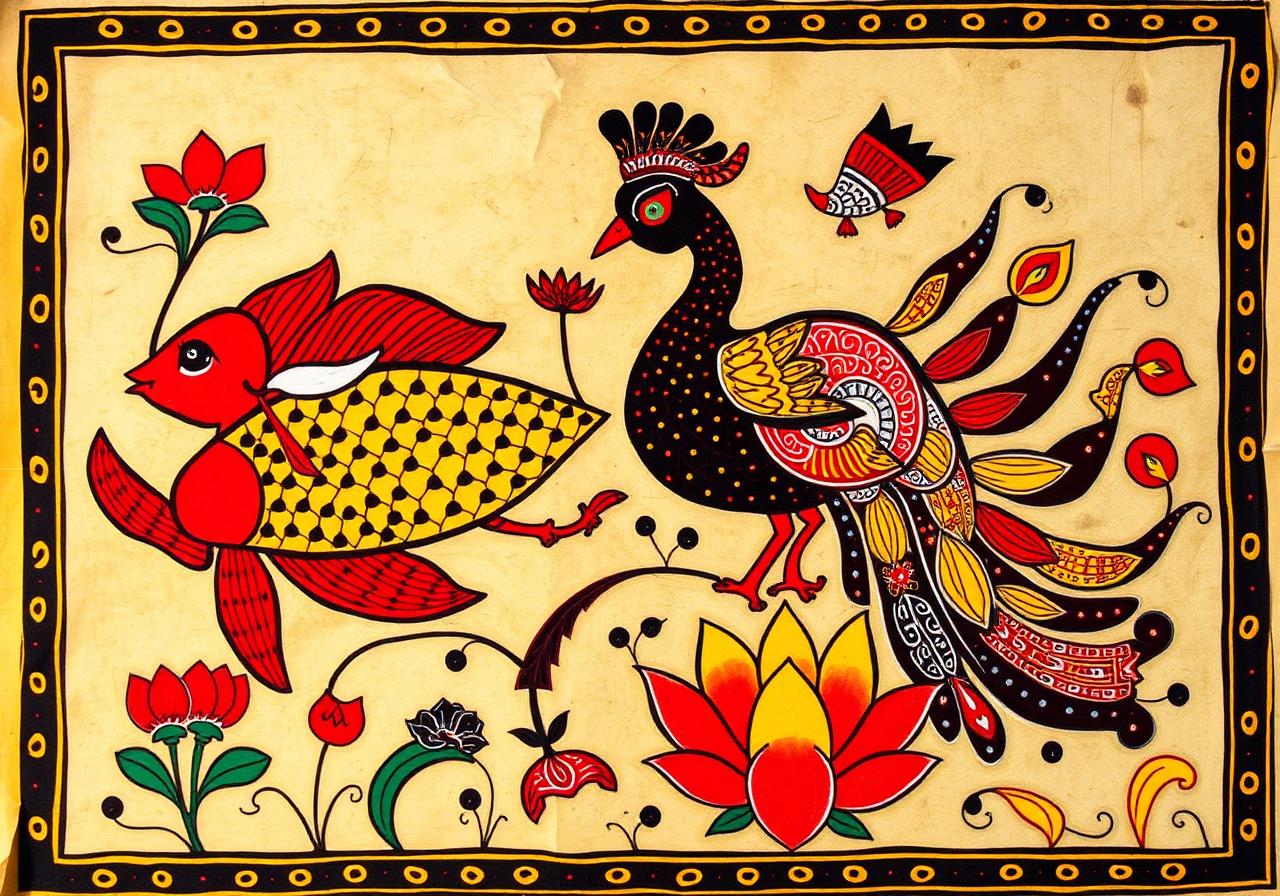
Mithila Painters of Bihar
Women have painted the walls of Madhubani homes for centuries to celebrate marriages and births. Today the same hands hang in the galleries of Tokyo and Berlin.